搬东西 · 动作捕捉拍摄说明Carrying Things · Motion Capture Brief
1需要拍多少How much to record
第一优先First priority
33条takes
约 2–2.5 小时about 2–2.5 hours
A 组 9 + B 组 16 + C 组 8set A 9 + set B 16 + set C 8
33 条 × 每条 2–3 分钟 + 搭道具约 45 分钟33 takes × 2–3 min + about 45 min to set up props
33 条 × 每条 2–3 分钟 + 搭道具约 45 分钟33 takes × 2–3 min + about 45 min to set up props
有余力再拍If time allows
17条takes
约 1–1.5 小时about 1–1.5 hours
D 组 6 + E 组 5 + F 组 6set D 6 + set E 5 + set F 6
17 条 × 每条 2–3 分钟 + 搭道具约 30 分钟17 takes × 2–3 min + about 30 min to set up props
17 条 × 每条 2–3 分钟 + 搭道具约 30 分钟17 takes × 2–3 min + about 30 min to set up props
可选,不计入Optional, not counted
很多人 · 两人一起抬 · 一人连续几分钟Many people · two people together · one long take
需要更多人或时间,有条件再拍These need more people or time
怎么估的:每条 2–3 分钟(动作 20–40 秒,加上把东西放回原处);每组搭道具 15–30 分钟;不算穿动捕服和标定。How this is estimated: 2–3 min per take (20–40 s of motion plus putting things back); 15–30 min to set up props for a set; suit-up and calibration not included.
2一条大概是这样What one take looks like
- 开拍时拍一下手;如果方便,再用一部固定的手机同时录视频。
- Clap once at the start; if convenient, also record each take with a fixed phone.
- 每位演员先录一条 T 姿态,并记下身高。
- Record one T-pose per performer and note their height.
3每一组拍什么What each set is
A
三种常见搬法Three common carries
第一优先First priority共 9 条9 takes统一设置:小箱子放在 A 点地上,拿起后直走 2–4 米,放到 B 点地上。Same setup for all three: the small box sits on the floor at A; pick it up, walk straight 2–4 m, and put it on the floor at B.
道具:Props: 小箱子约 25×15×20 cm、1 kg 左右,六个面都贴标记点。A small box, about 25×15×20 cm and about 1 kg, with markers on all six faces.


编号No.动作What to do参考Reference
A1双手托在身前Front, both hands under the box机器人示意robot sketch
A2抱在胸前Hugged to the chest机器人示意robot sketch
A3扛在右肩On the right shoulder机器人示意robot sketch
B
同一种搬法,换方向、绕障碍、换高度Same carry: new direction, an obstacle, a new height
第一优先First priority共 16 条16 takes选 2 种搬法(例如架在一侧胯上,或演员最顺手的搬法),每种都拍下面三项。Pick 2 ways of carrying (for example on one hip, or whatever feels natural), and do all three items with each.
道具:Props: 小箱子。The small box.
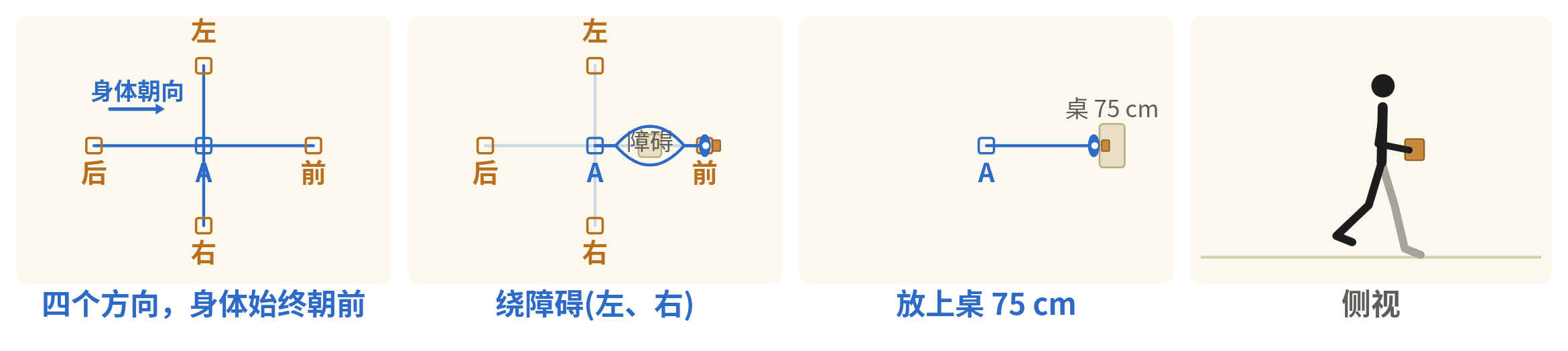
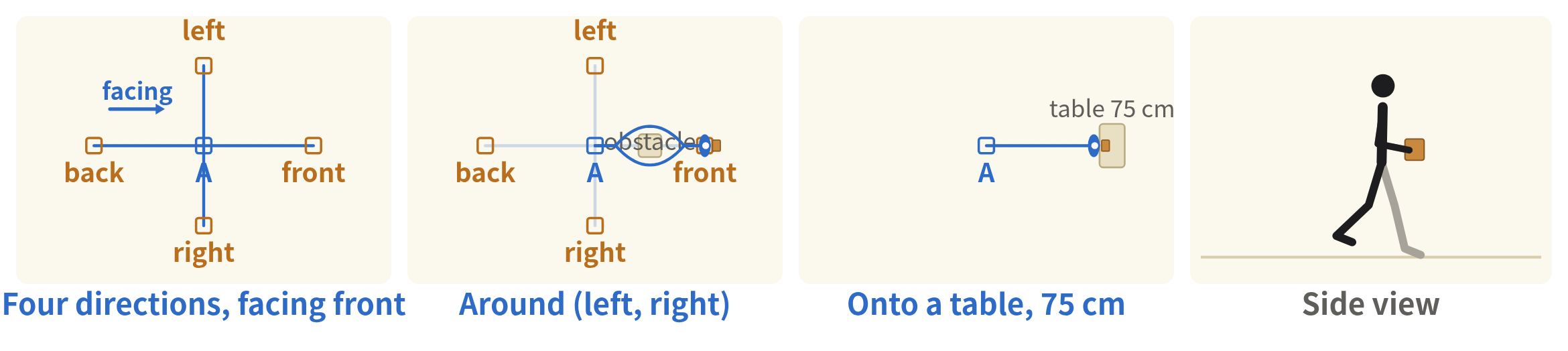
编号No.动作What to do参考Reference
B1从中间的 A 点拿起,走到前、左、右、后其中一个点放下Pick up at the middle mark A, walk to the front, left, right or back mark, put down—
B2A、B 中间放一个障碍,左边绕一次,右边绕一次An obstacle between A and B: go around once on the left, once on the right—
B3从地上放到桌上,再从桌上放回地上From the floor onto a table, then back to the floor—
C
长东西过窄的地方Long items through tight spots
第一优先First priority共 8 条8 takes长东西在窄处怎么转、什么时候竖起来,很难说清,看动作最直接。How to turn a long item in a tight spot, or when to tip it up, is hard to describe and easy to see.
道具:Props: 1.2–1.8 米的长东西(长纸箱、木板或卷起的地毯),2–6 kg,两头和中间贴标记点。A 1.2–1.8 m long item (long box, board or rolled rug), 2–6 kg, with markers at both ends and in the middle.


编号No.动作What to do参考Reference
C4弯腰或把长东西放低,从横杆下面穿过Duck or lower the item to pass under a bar机器人示意robot sketch
D
端托盘Carrying a tray
有余力再拍If time allows共 6 条6 takes端着水走路时,人会自己调整步子,让托盘保持平。With water on a tray, people adjust their steps on their own to keep it level.
道具:Props: 托盘约 40×30 cm,放 2–3 杯水(怕弄湿可以装米);两张桌子,相距 2–4 米。A tray of about 40×30 cm with 2–3 cups of water (rice is fine if water is a problem); two tables 2–4 m apart.
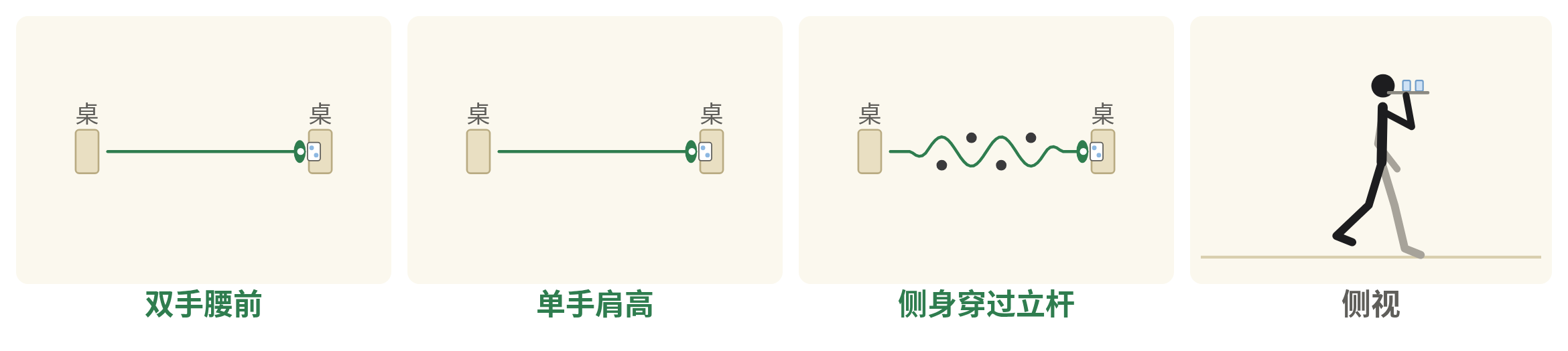
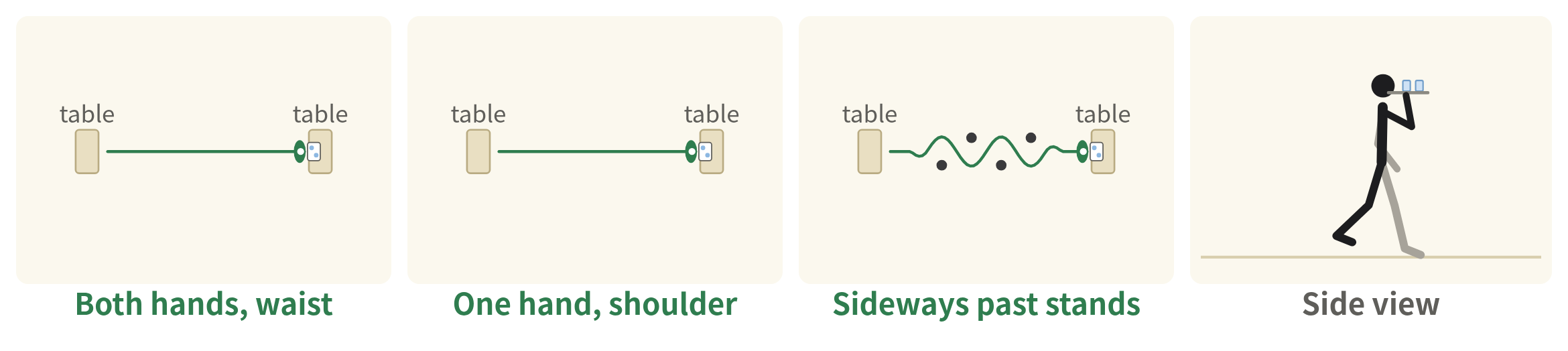
编号No.动作What to do参考Reference
D1双手端在腰前,从一张桌子端到另一张Both hands at the waist, from one table to the other
D3侧身从一排立杆中间穿过Sideways between a row of stands
E
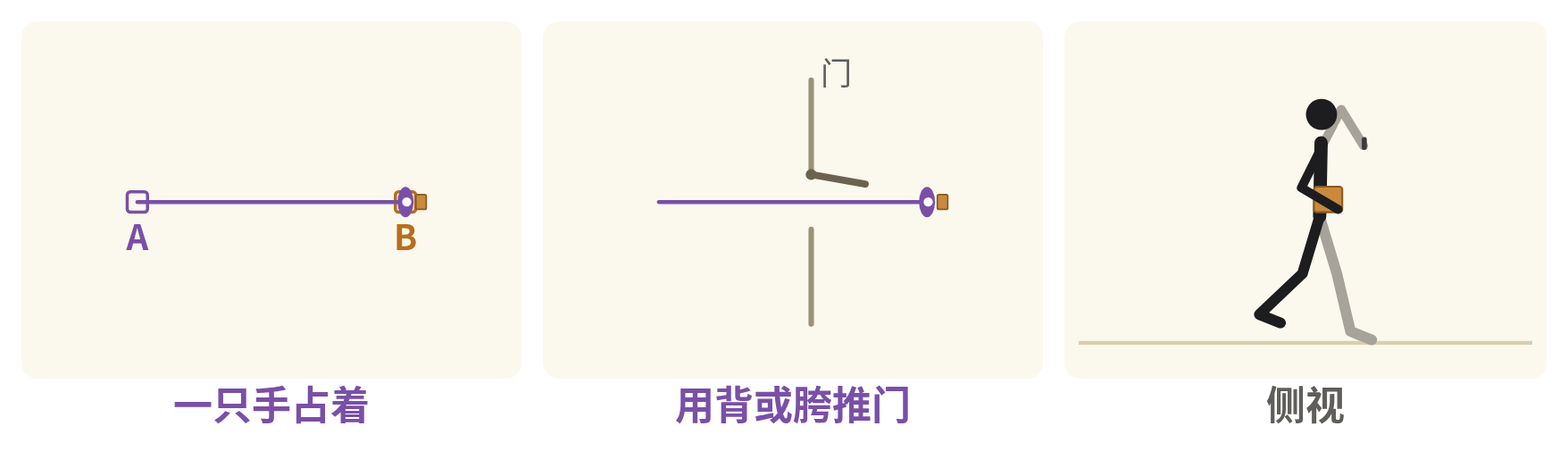
一只手占着One hand busy
有余力再拍If time allows共 5 条5 takes一只手拿着东西时,另一只手怎么搬,跟手里拿的是什么有关。When one hand holds something, how the other hand carries depends on what it is.
道具:Props: 小箱子。The small box.
编号No.动作What to do参考Reference
E1一只手拿手机、包或水杯,另一只手从地上拿起箱子搬走Phone, bag or cup in one hand; the other hand picks up the box and carries it
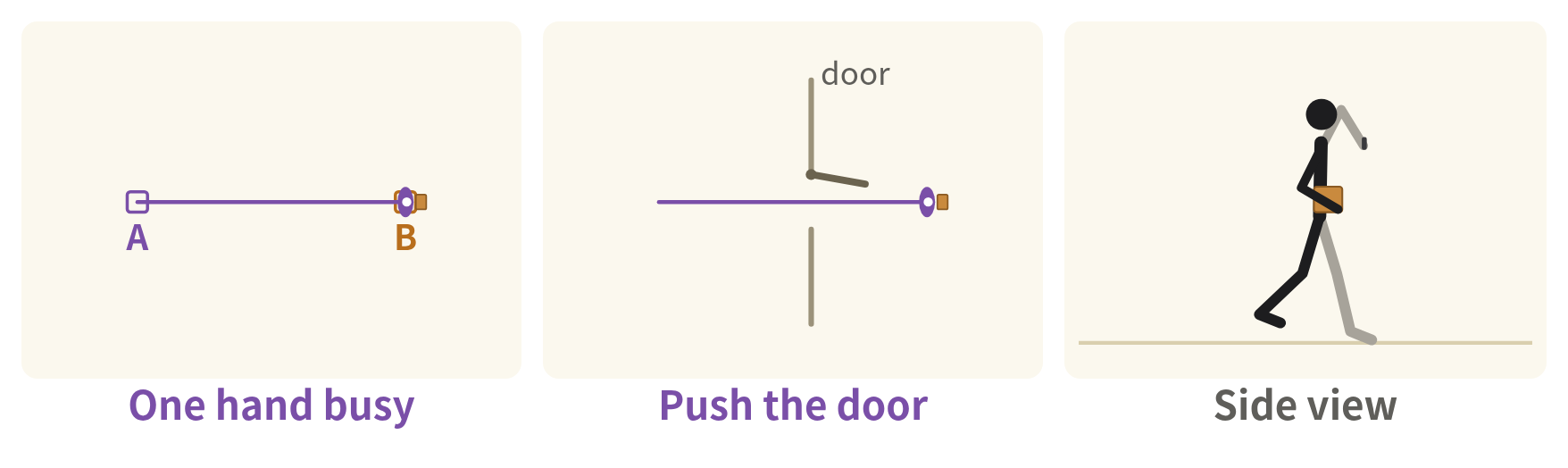
E2抱着箱子,用背或胯把门推开走过去Holding the box, push a door open with the back or hip and walk through—
F
轻、小心的步子Quiet, careful steps
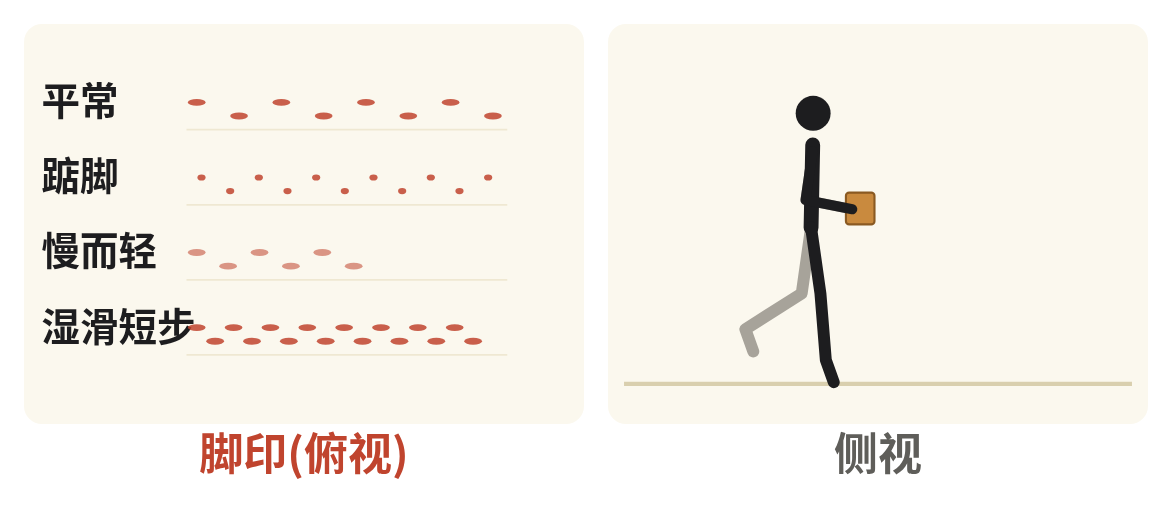
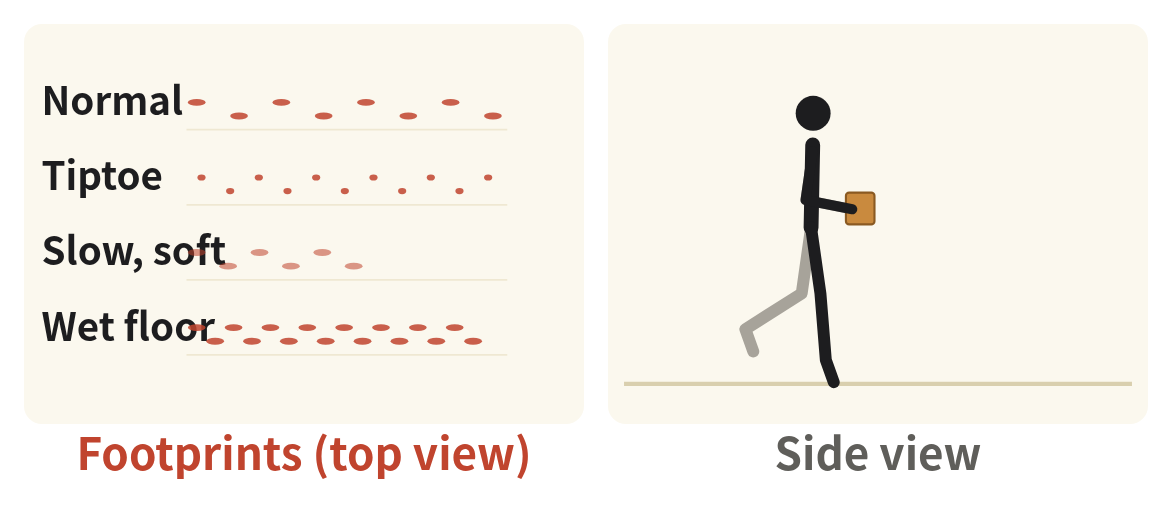
有余力再拍If time allows共 6 条6 takes「轻一点」「小心点」,每个人的走法都不一样。'Quietly' or 'carefully' looks different for everyone.
道具:Props: 拿着小箱子;脚跟和脚尖贴标记点。Carry the small box; markers on heels and toes.
编号No.动作What to do参考Reference
F3像走在湿滑的地上,小步走Short steps, as if the floor is wet
G
可选Optional
可选,不计入Optional, not counted需要更多人或时间,有条件再拍。第一项人越多越好,不需要专业演员。These need more people or time. For the first one, the more people the better; anyone can do it.
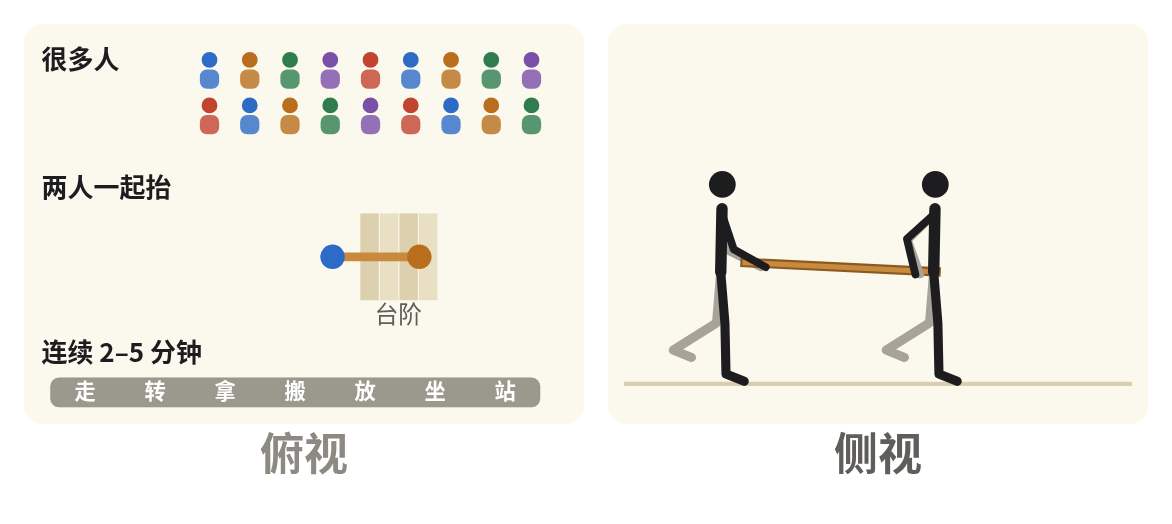
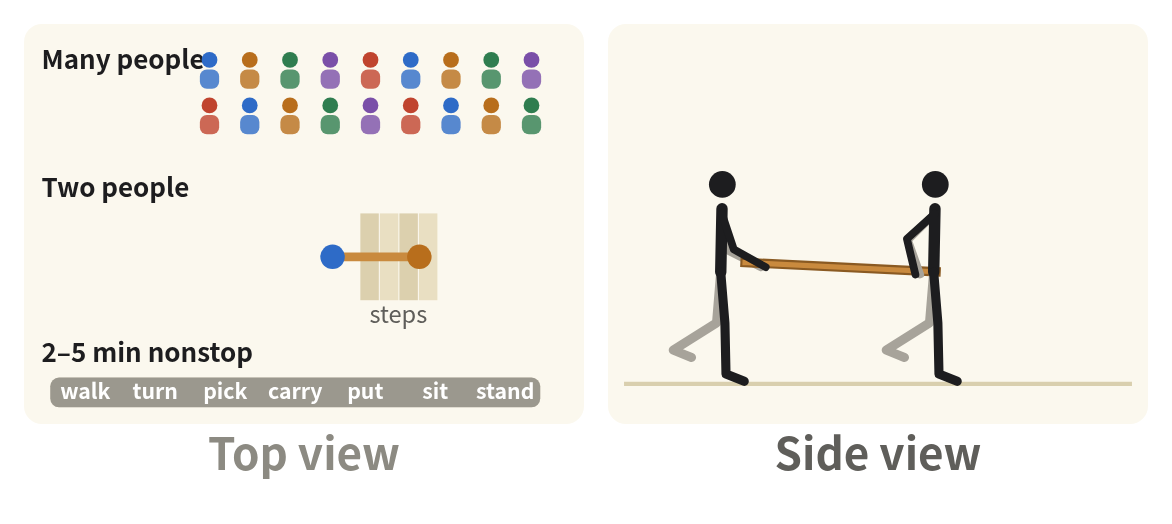
编号No.动作What to do参考Reference
G1很多人:每人自然走 2–4 米、拿起放下小箱子、坐下再站起Many people: each walks 2–4 m, picks up and puts down the small box, sits and stands—
G2两个人一起抬桌子或木板:直走、转弯、上下 3–4 级台阶Two people carry a table or board: straight, around a corner, up or down 3–4 steps
G3一个人连续 2–5 分钟:走、转身、拿起、搬、放下、坐、站One person, 2–5 minutes nonstop: walk, turn, pick up, carry, put down, sit, stand—
4文件格式Files
- 人体:每条一个 FBX 或 BVH,120 Hz 左右,注明单位和哪个轴朝上。会动的东西(箱子、长东西、托盘、门)的位置和朝向,和人体同一坐标、同一时间:FBX 里的刚体,或 CSV(
time, x, y, z, qx, qy, qz, qw)。 - Body: one FBX or BVH per take, about 120 Hz, with the units and the up axis. Moving things (box, long item, tray, door): position and rotation in the same frame and clock as the body, as rigid bodies in the FBX or a CSV (
time, x, y, z, qx, qy, qz, qw). - 每位演员一条 T 姿态和身高;道具的位置和大小。文件名带上编号,例如
C3_P2_t1(C3 这一条、2 号演员、第 1 次),手机视频用同一个名字。 - One T-pose and height per performer; prop positions and sizes. Put the item number in the file name, e.g.
C3_P2_t1(item C3, performer 2, first take); the phone video uses the same name.