搬东西 · 动作捕捉拍摄说明Carrying Things · Motion Capture Brief
1一遍大概是这样What one take looks like
- 如果方便,再用一部固定的手机同时录视频。录的话,每遍开始时演员双手在胸前击掌一次(像鼓掌那样):动捕和视频里都有这一下,用来对齐两边的时间。
- If convenient, also film each take with a fixed phone. If you do, the performer claps once in front of the chest at the start; the clap shows in both the mocap and the video, so their timing can be lined up.
- 每位演员先录一次 T 姿态,并记下身高。
- Record one T-pose per performer and note their height.
2每一组拍什么What each set is
「重复几遍」= 同一个动作照原样重复做几遍,每做一遍存一个文件。"Repeats" = how many times to do the same action as written; each time is one take, saved as one file.
A
六种常见搬法Six common carries
第一优先First priority共 24 遍24 takes每一遍都一样:小箱子放在 A 点地上,拿起后直走 2–4 米,放到 B 点地上。Every take is the same: the small box sits on the floor at A; pick it up, walk straight 2–4 m, and put it on the floor at B.
道具:Props: 小箱子约 25×15×20 cm、1 kg 左右,六个面都贴标记点。A small box, about 25×15×20 cm and about 1 kg, with markers on all six faces.


编号No.动作What to do参考Reference
A1双手托在身前Front, both hands under the box机器人示意robot sketch
A2抱在胸前Hugged to the chest机器人示意robot sketch
A3扛在右肩On the right shoulder机器人示意robot sketch
A4扛在左肩On the left shoulder机器人示意robot sketch
A5夹在右腋下Under the right arm机器人示意robot sketch
A6夹在左腋下Under the left arm机器人示意robot sketch
B
同一种搬法,换方向、绕障碍、换高度Same carry: new direction, an obstacle, a new height
第一优先First priority共 24 遍24 takes选 2 种搬法(例如架在一侧胯上,或演员最顺手的搬法)。下面三项两种搬法都拍;表里的遍数是一种搬法的。Pick 2 ways of carrying (for example on one hip, or whatever feels natural). Do all three items with both; the counts below are for one carry.
道具:Props: 小箱子。The small box.
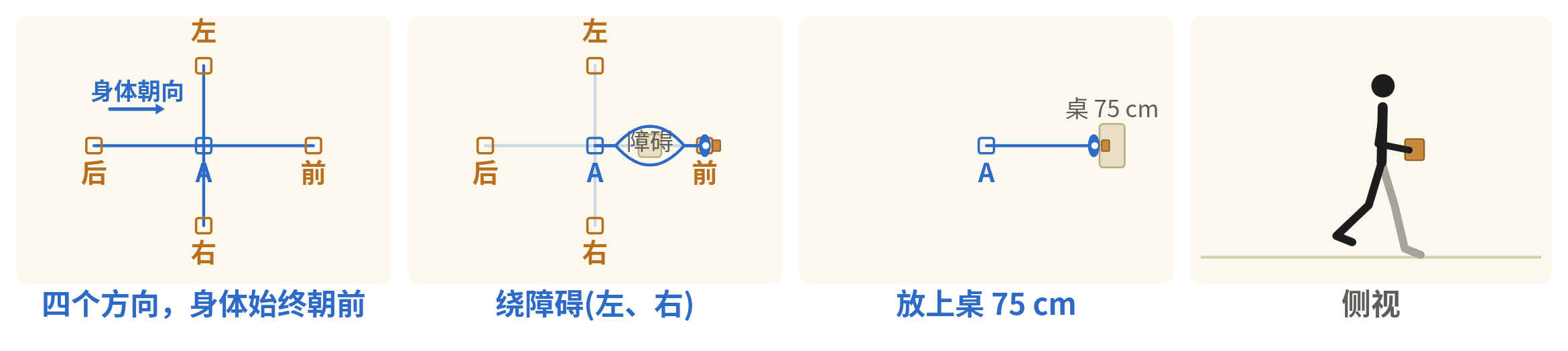
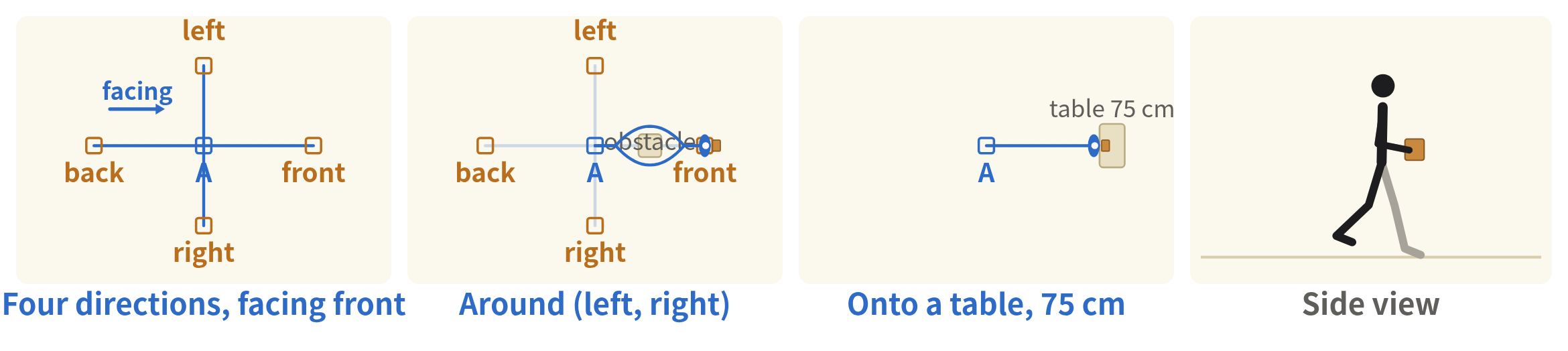
编号No.动作What to do参考Reference
B1在中间的 A 点拿起。身体始终朝前(朝同一面墙)不转身:向前走、向后退、向左横走、向右横走,到那个方向的点放下Pick up at the middle mark A. Keep facing the same wall the whole time, no turning: walk forward, back up, side-step left, side-step right, and put it down at that mark—
B2A、B 中间放一个障碍,从左边绕过去,再从右边绕过去An obstacle between A and B: go around it on the left, then on the right—
B3从地上拿起放到桌上,再从桌上拿起放回地上From the floor onto a table, then back to the floor—
C
长东西过窄的地方Long items through tight spots
第一优先First priority共 10 遍10 takes长东西在窄处怎么转、什么时候竖起来,很难说清,看动作最直接。How to turn a long item in a tight spot, or when to tip it up, is hard to describe and easy to see.
道具:Props: 1.2–1.8 米的长东西(长纸箱、木板或卷起的地毯),2–6 kg,两头和中间贴标记点。A 1.2–1.8 m long item (long box, board or rolled rug), 2–6 kg, with markers at both ends and in the middle.


编号No.动作What to do参考Reference
C4扛着从一根横杆下面走过去。横杆比肩低:弯腰低头过,或先把长东西从肩上放到腰间再过Carry it under a bar that is lower than the shoulder: duck under it, or first lower the item from the shoulder to the waist机器人示意robot sketch
C5更窄的直角转弯:扛到转角前放下、竖起来(一手高一手低握住),原地转过去,再扛回肩上接着走A tighter 90° corner: carry it to the corner, stand it upright (one hand high, one low), turn on the spot, then shoulder it again and walk on机器人示意robot sketch
D
端托盘Carrying a tray
有余力再拍If time allows共 6 遍6 takes端着水走路时,人会自己调整步子,让托盘保持平。With water on a tray, people adjust their steps on their own to keep it level.
道具:Props: 托盘约 40×30 cm,放 2–3 杯水(怕弄湿可以装米);两张桌子,相距 2–4 米。A tray of about 40×30 cm with 2–3 cups of water (rice is fine if water is a problem); two tables 2–4 m apart.
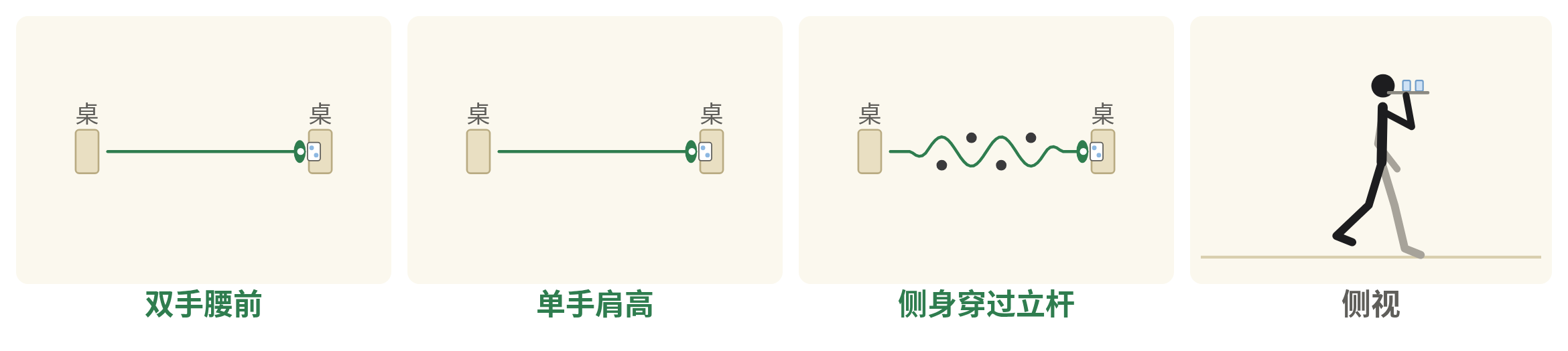
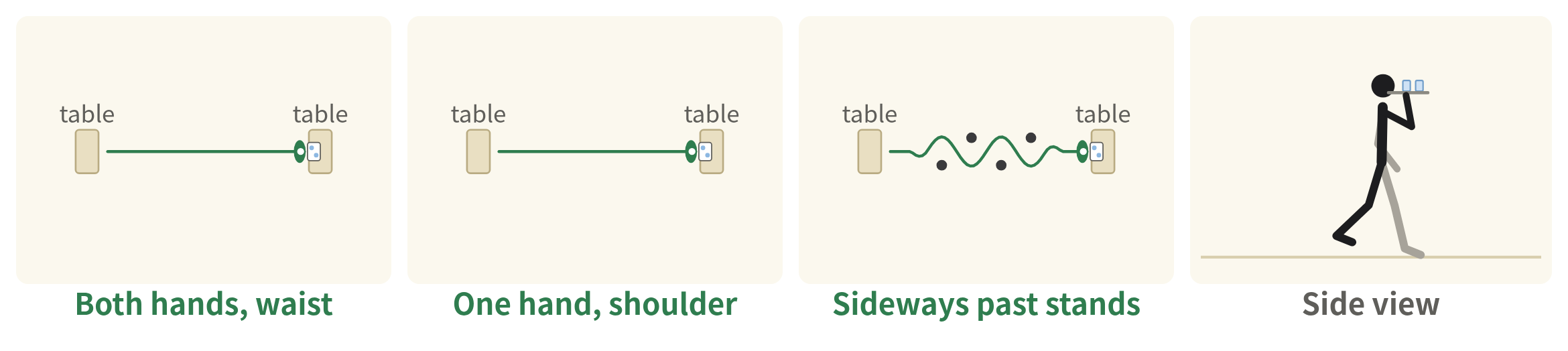
编号No.动作What to do参考Reference
D1双手端在腰前,从一张桌子端到另一张Both hands at the waist, from one table to the other
D3侧身从一排立杆中间穿过Sideways between a row of stands
E
一只手占着One hand busy
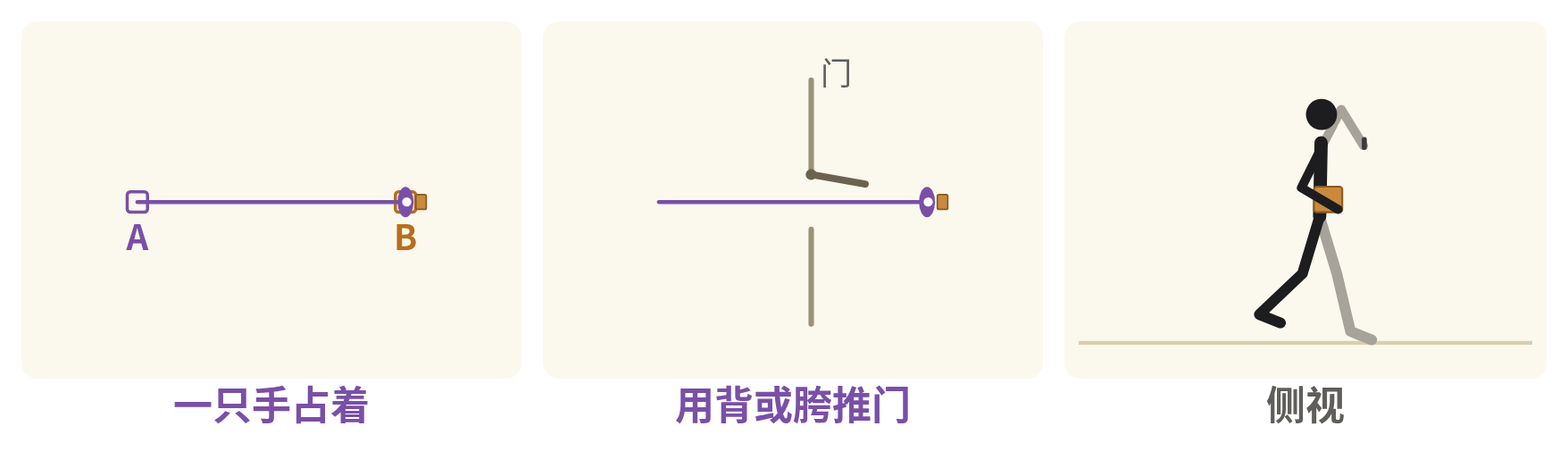
有余力再拍If time allows共 5 遍5 takes一只手拿着东西时,另一只手怎么搬,跟手里拿的是什么有关。When one hand holds something, how the other hand carries depends on what it is.
道具:Props: 小箱子。The small box.
编号No.动作What to do参考Reference
E1一只手拿手机、包或水杯,另一只手从地上拿起箱子搬走Phone, bag or cup in one hand; the other hand picks up the box and carries it
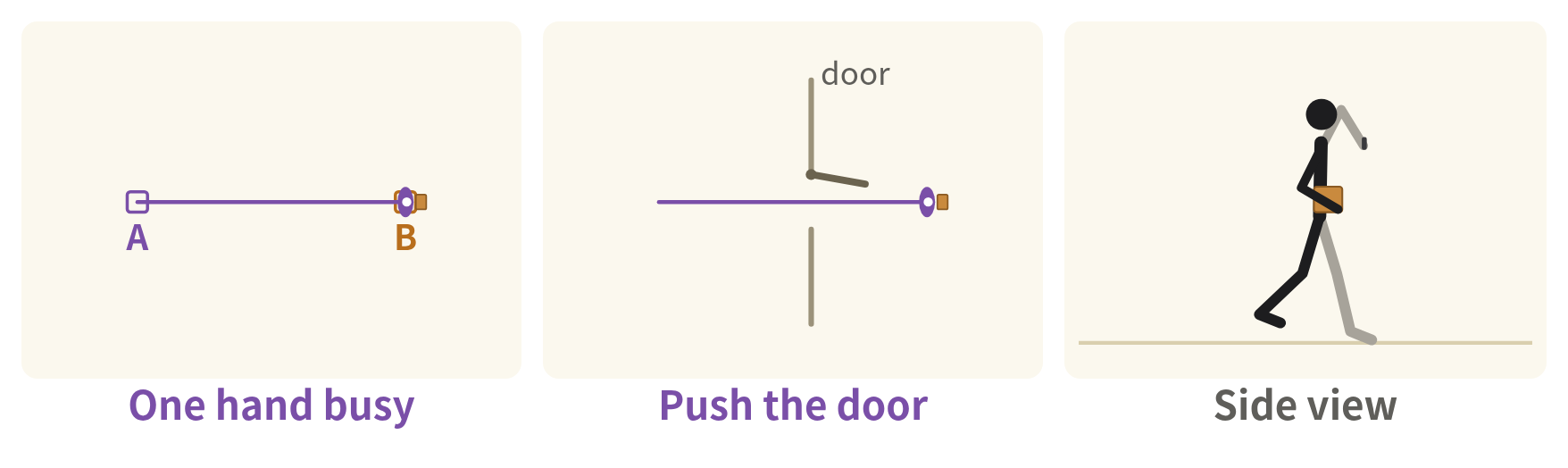
E2抱着箱子,用背或胯把门推开走过去Holding the box, push a door open with the back or hip and walk through—
F
轻、小心的步子Quiet, careful steps
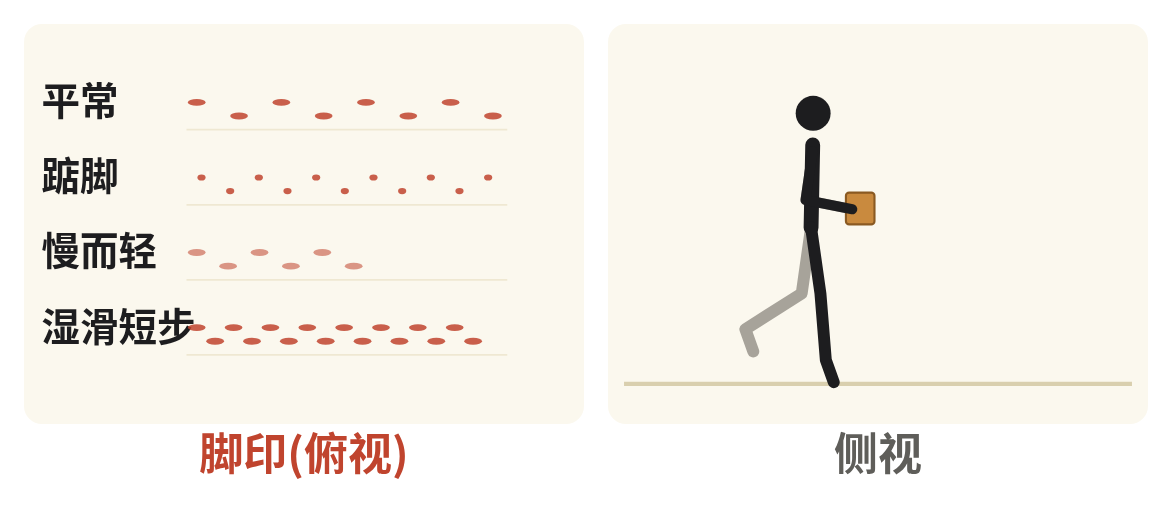
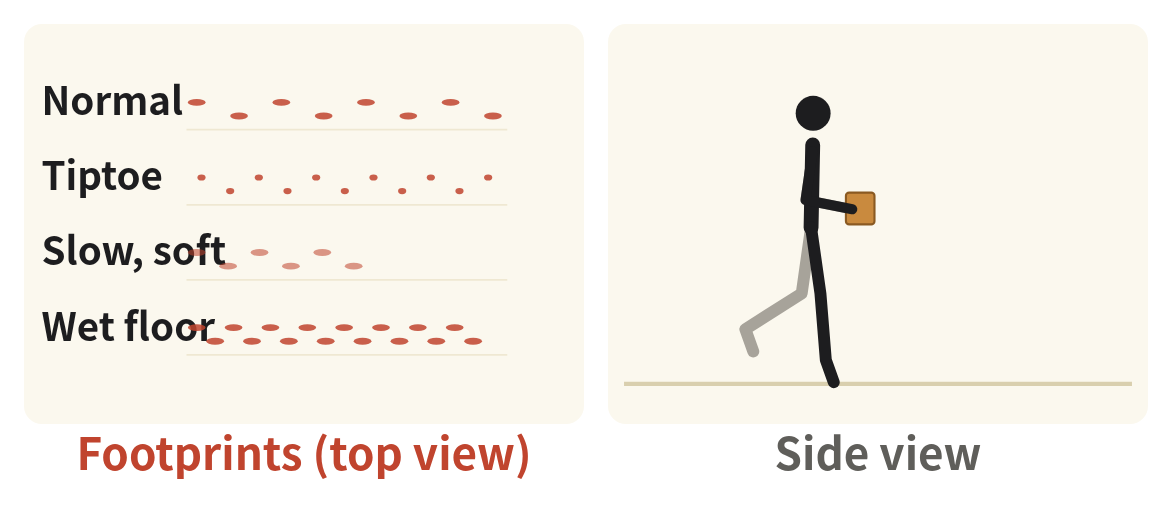
有余力再拍If time allows共 6 遍6 takes「轻一点」「小心点」,每个人的走法都不一样。'Quietly' or 'carefully' looks different for everyone.
道具:Props: 拿着小箱子;脚跟和脚尖贴标记点。Carry the small box; markers on heels and toes.
编号No.动作What to do参考Reference
F3像走在湿滑的地上,小步走Short steps, as if the floor is wet
G
可选Optional
可选,不计入Optional, not counted需要更多人或时间,有条件再拍。第一项人越多越好,不需要专业演员。These need more people or time. For the first one, the more people the better; anyone can do it.
编号No.动作What to do参考Reference
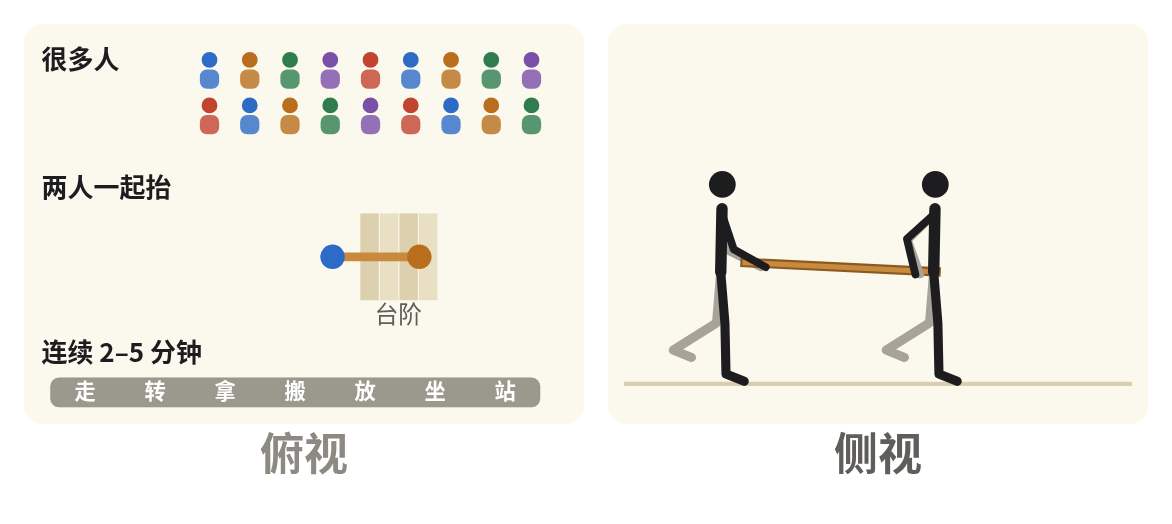
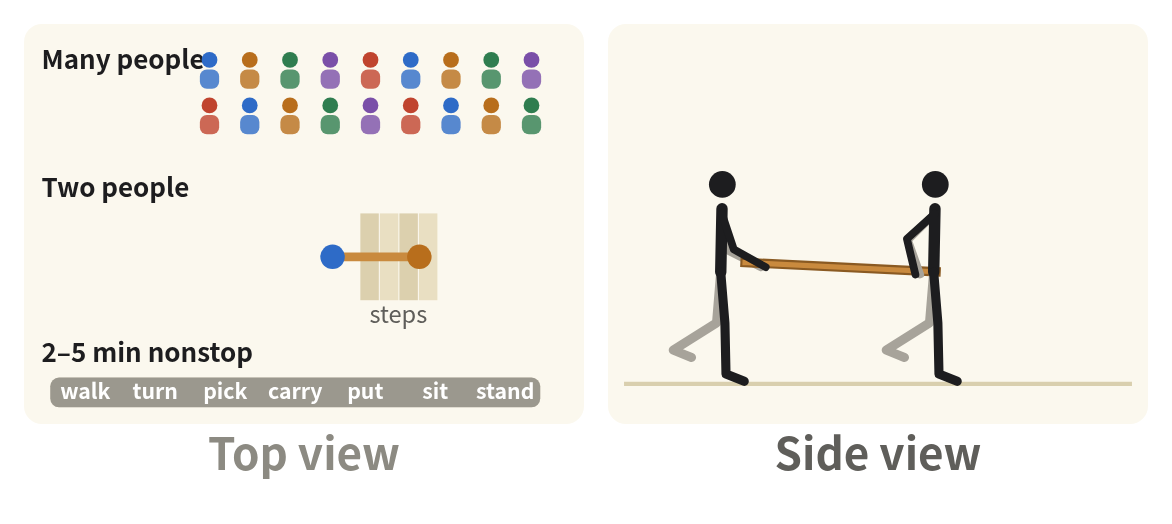
G1很多人:每人自然走 2–4 米、拿起放下小箱子、坐下再站起Many people: each walks 2–4 m, picks up and puts down the small box, sits and stands—
G2两个人一起抬桌子或木板:直走、转弯、上下 3–4 级台阶Two people carry a table or board: straight, around a corner, up or down 3–4 steps
G3一个人连续 2–5 分钟:走、转身、拿起、搬、放下、坐、站One person, 2–5 minutes nonstop: walk, turn, pick up, carry, put down, sit, stand—
3一共多少In total
第一优先First priority
58遍takes
约 2.5–3.5 小时about 2.5–3.5 hours
A、B 和 C 组Sets A, B and C
有余力再拍If time allows
17遍takes
约 1–1.5 小时about 1–1.5 hours
D、E 和 F 组Sets D, E and F
可选,不计入Optional, not counted
很多人 · 两人一起抬 · 一人连续几分钟Many people · two people together · one long take
需要更多人或时间,有条件再拍These need more people or time
怎么估的:每遍 2–3 分钟(动作 20–40 秒,加上把东西放回原处);每组搭道具 15–30 分钟;不算穿动捕服和标定。How this is estimated: 2–3 min per take (20–40 s of motion plus putting things back); 15–30 min to set up props for a set; suit-up and calibration not included.
4文件格式Files
- 人体:每遍一个 FBX 或 BVH,120 Hz 左右,注明单位和哪个轴朝上。会动的东西(箱子、长东西、托盘、门)的位置和朝向,和人体同一坐标、同一时间:FBX 里的刚体,或 CSV(
time, x, y, z, qx, qy, qz, qw)。 - Body: one FBX or BVH per take, about 120 Hz, with the units and the up axis. Moving things (box, long item, tray, door): position and rotation in the same frame and clock as the body, as rigid bodies in the FBX or a CSV (
time, x, y, z, qx, qy, qz, qw). - 每位演员一次 T 姿态和身高;道具的位置和大小。文件名带上编号,例如
C3_P2_t1(C3 这一项、2 号演员、第 1 遍),手机视频用同一个名字。 - One T-pose and height per performer; prop positions and sizes. Put the item number in the file name, e.g.
C3_P2_t1(item C3, performer 2, first take); the phone video uses the same name.